Background Pattern 69 block design & features
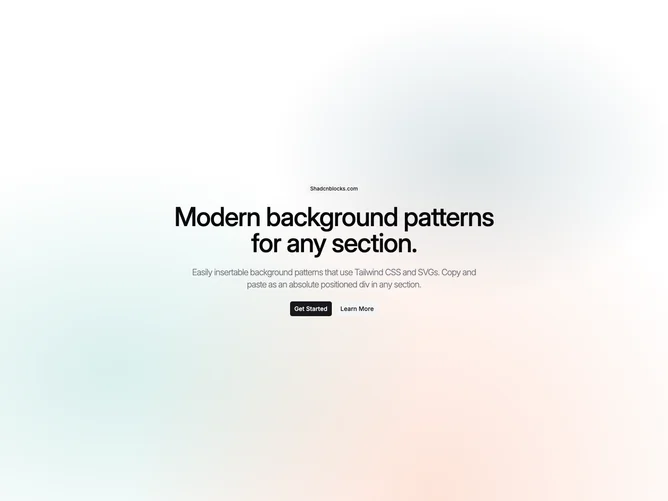
The BackgroundPattern69 component artfully combines aesthetic presentation with functional utility, serving as a sophisticated backdrop designed to enhance user interfaces while accommodating additional content dynamically. Its core utility lies in implementing a vibrant, layered pattern that presents an engaging visual experience. As a shadcn component, it efficiently utilizes a precise blend of color gradients to define a unique visual style, setting itself apart from standard background offerings by focusing on modern and visually appealing aesthetics that captivate the user's attention.
Delving deeper, this component shines with its intricate design architecture that prevents visual monotony and allows for easy integration into diverse applications. It utilizes radial gradients mapped in a deliberate pattern, referred to as the "Diagonal Drift Trio," to create a sense of depth and movement across the screen. The use of CSS variables for color theming adds a layer of customization, allowing developers to tailor the background to fit different color schemes effortlessly. The BackgroundPattern69, categorized as a shadcn block, stands out for its ability to enrich the background with minimal intrusiveness while providing a flexible base for integrating additional elements through the PatternPlaceholder. This composition ultimately ensures that the utility goes beyond mere aesthetic, positioning itself as a foundational element for organized and intuitive interface design.